
Women’s rights are human rights!
We are all entitled to human rights. These include the right to live free from violence and discrimination; to enjoy the highest attainable standard of physical and mental health; to be educated; to own property; to vote; and to earn an equal wage.
But across the globe many women and girls still face discrimination on the basis of sex and gender. Gender inequality underpins many problems which disproportionately affect women and girls, such as domestic and sexual violence, lower pay, lack of access to education, and inadequate healthcare.
For many years women’s rights movements have fought hard to address this inequality, campaigning to change laws or taking to the streets to demand their rights are respected. And new movements have flourished in the digital age, such as the #MeToo campaign which highlights the prevalence of gender-based violence and sexual harassment.
Through research, advocacy and campaigning, Amnesty International pressures the people in power to respect women’s rights.
On this page we look at the history of women’s rights, what women’s rights actually are, and what Amnesty is doing.
What do we mean when we talk about women’s rights? What are we fighting for? Here are just some examples of the rights which activists throughout the centuries and today have been fighting for:
During the 19th and early 20th centuries people began to agitate for the right of women to vote. In 1893 New Zealand became the first country to give women the right to vote on a national level. This movement grew to spread all around the world, and thanks to the efforts of everyone involved in this struggle, today women’s suffrage is a right under the Convention on the Elimination of All Forms of Discrimination Against Women (1979).
However, despite these developments there are still many places around the world where it is very difficult for women to exercise this right. Take Syria for example, where women have been effectively cut off from political engagement, including the ongoing peace process.
In Pakistan, although voting is a constitutional right, in some areas women have been effectively prohibited from voting due to powerful figures in their communities using patriarchal local customs to bar them from going to the polls.
And in Afghanistan, authorities recently decided to introduce mandatory photo screening at polling stations, making voting problematic for women in conservative areas, where most women cover their faces in public.
Amnesty International campaigns for all women to be able to effectively participate in the political process.
Everyone should be able to make decisions about their own body.
Every woman and girl has sexual and reproductive rights . This means they are entitled to equal access to health services like contraception and safe abortions, to choose if, when, and who they marry, and to decide if they want to have children and if so how many, when and with who.
Women should be able to live without fear of gender-based violence, including rape and other sexual violence, female genital mutilation (FGM), forced marriage, forced pregnancy, forced abortion, or forced sterilization.
But there’s a long way to go until all women can enjoy these rights.
For example, many women and girls around the world are still unable to access safe and legal abortions. In several countries, people who want or need to end pregnancies are often forced to make an impossible choice: put their lives at risk or go to jail.
In Argentina, Amnesty International has campaigned alongside grassroots human rights defenders to change the country’s strict abortion laws. There have been some major steps forward, but women and girls are still being harmed by laws which mean they cannot make choices about their own bodies.
We have also campaigned successfully in Ireland and Northern Ireland, where abortion was recently decriminalised after many decades of lobbying by Amnesty and other rights groups.
In Poland along with more than 200 human and women’s rights organisations from across the globe, Amnesty has co-signed a joint statement protesting the ‘Stop Abortion’ bill.
South Korea has recently seen major advances in sexual and reproductive rights after many years of campaigning by Amnesty and other groups, culminating in a ruling by South Korea’s Constitutional Court that orders the government to decriminalize abortion in the country and reform the country’s highly restrictive abortion laws by the end of 2020.
In Burkina Faso, Amnesty International has supported women and girls in their fight against forced marriage, which affects a huge number of girls especially in rural areas.
And in Sierra Leone, Amnesty International has been working with local communities as part of our Human Rights Education Programme, which focuses on a number of human rights issues, including female genital mutilation.
In Zimbabwe, we found that women and girls were left vulnerable to unwanted pregnancies and a higher risk of HIV infection because of widespread confusion around sexual consent and access to sexual health services. This meant that girls would face discrimination, the risk of child marriage, economic hardship and barriers to education.
In Jordan Amnesty International has urged authorities to stop colluding with an abusive male “guardianship” system which controls women’s lives and limits their personal freedoms, including detaining women accused of leaving home without permission or having sex outside marriage and subjecting them to humiliating “virginity tests”.
Freedom of movement is the right to move around freely as we please – not just within the country we live in, but also to visit others. But many women face real challenges when it comes to this. They may not be allowed to have their own passports, or they might have to seek permission from a male guardian in order to travel.
For example, recently in Saudi Arabia there has been a successful campaign to allow women to drive, which had previously been banned for many decades. But despite this landmark gain, the authorities continue to persecute and detain many women’s rights activists, simply for peacefully advocating for their rights.
When looking at women’s rights it’s helpful to have an understanding of feminism. At its core, feminism is the belief that women are entitled to political, economic, and social equality. Feminism is committed to ensuring women can fully enjoy their rights on an equal footing with men.
Intersectional feminism is the idea that all of the reasons someone might be discriminated against, including race, gender, sexual orientation, gender identity, economic class, and disability, among others, overlap and intersect with each other. One way of understanding this would be to look at how this might apply in a real world setting, such as Dominica, where our research has shown that women sex workers, who are often people of colour, or transgender, or both, suffer torture and persecution by the police.
Gender inequality could include:
Gender-based violence is when violent acts are committed against women and LGBTI people on the basis of their orientation, gender identity, or sex characteristics. Gender based violence happens to women and girls in disproportionate numbers.
Women and girls in conflict are especially at risk from violence, and throughout history sexual violence has been used as a weapon of war. For example, we have documented how many women who fled attacks from Boko Haram in Nigeria have been subjected to sexual violence and rape by the Nigerian military.
Globally, on average 30% of all women who have been in a relationship have experienced physical and/or sexual violence committed against them by their partner. Women are more likely to be victims of sexual assault including rape, and are more likely to be the victims of so-called “honour crimes”.
Violence against women is a major human rights violation. It is the responsibility of a state to protect women from gender-based violence – even domestic abuse behind closed doors.
Sexual harassment means any unwelcome sexual behaviour. This could be physical conduct and advances, demanding or requesting sexual favours or using inappropriate sexual language.
Sexual violence is when someone is physically sexually assaulted. Although men and boys can also be victims of sexual violence, it is women and girls who are overwhelmingly affected.
Often, women are the subject of gender based discrimination in the workplace. One way of illustrating this is to look at the gender pay gap. Equal pay for the same work is a human right, but time and again women are denied access to a fair and equal wage. Recent figures show that women currently earn roughly 77% of what men earn for the same work. This leads to a lifetime of financial disparity for women, prevents them from fully exercising independence, and means an increased risk of poverty in later life.
In many countries around the world, women are denied their rights on the basis of sexual orientation, gender identity, or sex characteristics. Lesbian, bisexual, trans and intersex women and gender non-confirming people face violence, exclusion, harassment, and discrimination Many are also subjected to extreme violence, including sexual violence or so called “corrective rape” and “honour killings.”
The Convention on the Elimination of All Forms of Discrimination against Women (CEDAW) (1979) is a key international treaty addressing gender-based discrimination and providing specific protections for women’s rights.
The convention sets out an international bill of rights for women and girls, and defines what obligations states have make sure women can enjoy those rights.
Over 180 states have ratified the convention.
It might seem like an obvious point, but we cannot have a free and equal society until everyone is free and equal. Until women enjoy the the same rights as men, this inequality is everyone’s problem.
According to the UN, “gender equality and the empowerment of women and girls is not just a goal in itself, but a key to sustainable development, economic growth, and peace and security”. Research has shown this to be the case – society gets better for everyone when women’s rights are upheld and taken seriously.
Although grassroots movements have done so much to effect change, when everyone comes together to support women’s rights we can be so much stronger. By working alongside individual activists and campaigners on the ground as well as running our own targeted campaigns, movements such as Amnesty International can form a formidable vanguard in the fight for women’s rights.
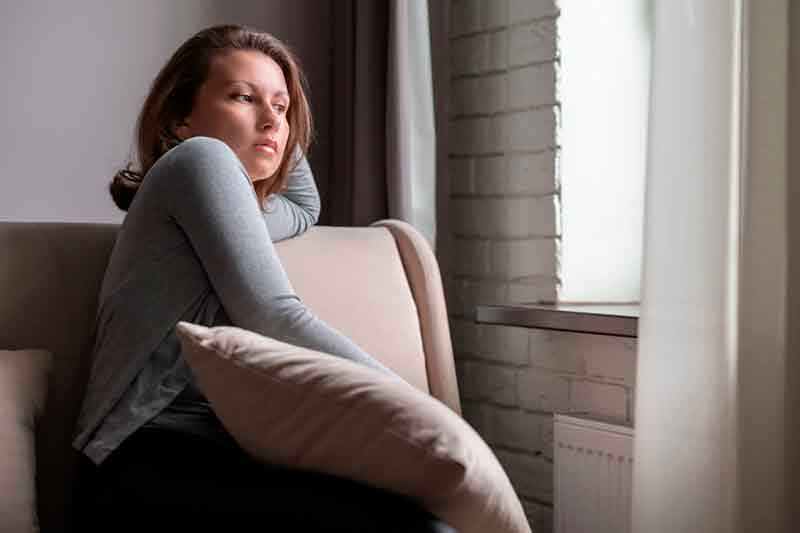
Does uncertainty cause anxiety? Discover how to embrace not knowing as a fact of life and improve your wellbeing.
Lately, I’ve had the weird sensation that life has been put on hold. I want to book a trip to New York, but keep putting it off, in the hope that the currency exchange might improve. I want to sort out a legal issue, but have been counselled against doing so right now. ‘There might be a change in the law soon, but there might not,’ said my adviser. I’d like to start a new project, but maybe the time isn’t right, what with the gloomy and capricious economy. In short, currently, my life is paralysed by anxiety and uncertainty. And it turns out that I’m not alone.
Does uncertainty cause anxiety? Our complicated, ever-changing world can certainly cause feelings of anxiety to rise – however, by accepting that uncertainty is a part of life and that it’s okay to say ‘I don’t know’, we can positively reframe uncertainty and gladly welcome the plot twists of life, whatever they may be.
Why it’s okay to say ‘I don’t know’
‘Right now, everything is uncertain. It’s like the whole world is just a complex mess,’ says Simon Hague, founder of the coaching group Where’s My Lunch. ‘There are so many conflicting things we have to try and make sense of, both personally and in business. Uncertainty is the only certainty we’ve got right now.’
This is reassuring, but what can we actually do about it? ‘It’s about having a mindset shift. We need to learn to accept that uncertainty is a fact of life, now more than ever before.’ Hague suggests that one frequently overlooked source of daily uncertainty comes from online communication. ‘So many of my clients are struggling with this. They check their email or social media several times a day, and they have no idea what’s awaiting them.’
I’d never considered it before, but this uncertainty is the reason I find checking emails stressful and anxiety-inducing. For one thing, the lines between personal and professional have become utterly blurred. My daily emails could easily contain messages about an important contract, a family birthday or a notification about my new Hoover warranty.
‘It’s very difficult to gauge tone or nuance from an email, too,’ observes Hague. ‘And, in any case, the tone very much depends on the frame of mind the person was in when they wrote it.
‘If someone who is normally friendly and chatty sends a terse message when they’re rushing to catch a train saying “we need to chat”, it’s easy to jump to the wrong conclusion. We try to predict the pattern of what someone may be expressing, which doesn’t help. My advice would be to take a step back and accept that a level of “I don’t know” is something you need to get comfortable with.’
How the fried-egg philosophy can ease anxiety from uncertainty
It’s a solution which sounds so simple that, initially, I think it’s hardly worth trying. But, next time I open my inbox, instead of holding my breath while I scan it, I recite the ‘I don’t know’ mantra. The first thing I see is an email from my local council. They never email me. Could it be that my council tax payment has gone astray?
Deep breath. ‘I don’t know,’ I say out loud and, strangely, I instantly feel calmer. After I’ve read the email – something dull about putting out the bins – I adopt the same technique with the rest of my inbox and breathe a sigh of relief.
One way to deal with anxiety caused by uncertainty, suggests Hague, is to think of it like a fried egg. ‘In the middle, you’ve got the delicious yellow yolk. Think of this as the stuff in your life that you can control, while the white part represents what you can’t. If you can’t control it, why do you even need to think about it? Let it go.’
He cites a pertinent example of buying a house. In order to afford it, you need to earn an extra £6,000 a year. ‘You have no idea how to get the money. You start obsessing about how to convince your cash-strapped boss to give you a pay rise, and it creates stress because it’s outside your control. You shouldn’t think that way. Instead, brainstorm about how you can generate that money yourself.’
So, taking a Saturday job in a pub or shop, doing regular eBay and car boot sales and offering a service or skill to family and friends… those are ways of taking action and bringing things under your control.
The whole world seems so uncertain at the moment. It’s okay to take a step back and say ‘I don’t know’.
The 4 different types of uncertainty
Does uncertainty cause anxiety? When it comes to tackling anxiety from uncertainty, it’s helpful to know that, in psychotherapy terms, there are actually four different types of uncertainty. Reenee Singh is a family and systemic psychotherapist, chief executive of the Association of Family Therapy, member of the UK Council for Psychotherapy and one of the directors of The Child and Family Practice.
‘I draw on psychotherapist Barry Mason’s ideas,’ she says. ‘In 1993, before Brexit was even a thing, he wrote a seminal paper called Towards Positions Of Safe Uncertainty. It introduced the idea that there are four different positions we can take.’
They are: unsafe uncertainty (dangerous, unclear, chaotic, random); unsafe certainty (controlling, toxic, negative, critical); safe uncertainty (adaptive, innovative, challenging); and safe certainty (comfort zone, repetitive, complacent).
‘Mason suggests that safe uncertainty is the most helpful one, where there’s a basic foundation of security. Within that, people are willing to be creative, explore new ideas and play with the flux that is part of everyone’s life. He also talks about how uncertainty can either promote paralysis or creativity,’ says Singh. The good news is that there are tools to help you get into the creative mindset.
‘A great way to start is to imagine the opposite state. So, with clients, I ask them to focus on what feels certain in life right now. What are the securities you take for granted? If you’re at the mercy of a job search or house-buying process, for example, I would advocate sticking to a predictable routine that you feel safe with.
‘This can be as simple as exercising at the same time every day; something within your control. Another thing you can try is to embrace the parts of your identity that feel stable, such as friendships or family relationships.’
Embrace your identity during uncertain times
Singh offers me a great exercise to reinforce this idea of stable identity. First, write down a list of 10 things that describe your essential self. I note my mixed-race identity, profession, sense of humour, place of residence, key relationships and love of colour. For the second part, I’m asked to imagine that I’m a refugee. How many of the things on my list would remain unchanged? I’m cheered to observe that quite a few would stay the same.
‘The idea is to identify those central aspects of identity that remain, despite difficult circumstances. Those are the parts of you that you should embrace during times of anxiety from uncertainty,’ advises Singh.
‘For example, if you consider yourself to be a good friend, even if you moved to a new place where you knew no one, you could still be a friend to whoever was around you. And you could still keep the feelings of friendship afloat for those who are absent.’
Accepting what you cannot control
The other upside of doing the exercise is that it helps to clarify what we can and cannot control. In her book Stress Proof (New Harbinger, £12.99), Mithu Storoni explores the impact of uncertainty on the brain, and exactly how much havoc it can cause.
‘Humans have evolved to have mechanisms to keep us the same, even when our environment changes. Pretty much all the time, we don’t know what will happen next. But our brain needs to be able to predict the future, because it needs to bring the environment under control. This is known as homoeostasis. It’s what causes us to sweat when we enter a hot room or shiver when we go to the polar vortex. The body wants us to stay at a constant temperature.’
She observes that it’s the same with our ‘emotional brain’, and that we all have a setpoint that acts as a kind of mental compass. Storoni points out that problems like anxiety arise when uncertainty doesn’t happen in a short burst but is prolonged.
‘The brain changes the way we process information coming from outside, so that stimulus is perceived as being more negative. With this negativity bias, we become hypervigilant to threat. The manifestation is chronic stress.’
Problems like anxiety arise when uncertainty doesn’t happen in a short burst but is prolonged.
How our inability to interpret others causes anxiety
Interestingly, Storoni asserts that one of the biggest sources of uncertainty in our lives today is what she terms ‘psychosocial stress’ – not knowing how to interpret the intentions or actions of other people.
‘Today, we live in an urban jungle where the lions of the past have morphed into our friends, our neighbours and our colleagues. Survival today is about who can navigate in the best possible way to reduce social threat and competitive negativity. Research has shown that these psychosocial threats result in an even bigger stress response than a physical attack. The release of cortisol has been shown to be stronger with psychosocial stress.’
She cites the example of somebody elbowing you out of the way on a packed commuter train; a commonplace occurrence. ‘The brain perceives this as a threat because, subconsciously, the person’s motive is not certain. ‘Did the person do it deliberately? Why me? Who are they anyway?’ As an antidote, she suggests we regulate our minds with as much attention as we lavish on the physical body.
‘We regard the mind as a tool, but then forget that real artisans always sharpen their tools. When our powerful minds become rusty, we tend to simply push harder. If the mind was a knife, we would polish it back to optimum form before putting it under stress again.’
Distract your brain from ‘what ifs’
Ways that we can regulate our minds include ensuring that we get enough sleep, losing ourselves in an engrossing pastime that promotes flow state and, most surprising perhaps, playing a computer game, such as Tetris.
It sounds counterintuitive, but Storoni suggests that the best strategy for dealing with a mind that’s whirring away in ‘if this/then that/but maybe something else’ mode is to immediately engage the mind in a different activity, to distract from this anxiety caused by uncertainty.
‘That’s why Tetris is so great, and scientific studies back this up. You need something that grips your attention. When you’re stressed, you can’t tell your mind what to think, you can only tell it what to do. You want an activity that will stretch the mind enough and also give you the buzz of a reward when you win.’
Testing out the Tetris theory:
To be honest, I am someone who’s never downloaded a game in my life, so this doesn’t inspire me. But, in the interests of research, at the end of a frustrating day, I decide to give it a go. My mind was ruminating on the outcome of a vexing situation. To my amazement, after seven games of Tetris, my whole focus is immersed in the game, not on my problems.
Later, a friend calls to find out how I’m doing. ‘Amazing – I’ve got to level six!’ I reply, much to her bewilderment. But what solutions can we adopt for those scenarios that are uncertain in arenas way beyond our control? The UK’s relationship with Europe, the rise of populism on a global scale and climate change, to name three examples.
‘A key way forward is engaging in dialogue,’ suggests Singh. ‘Some people might be feeling unsafe and anxious about uncertain political issues – which is understandable because they could affect the value of people’s homes and their livelihoods; or their relationships with loved ones living in other countries. I advise focusing on the things that give you comfort instead, so you don’t feel overwhelmed.’
anxiety uncertainty distractions
A great strategy for dealing with a busy mind that is focused on uncertainty is to immediately engage the mind in a different activity
Talk to others about your anxiety and uncertainty
Singh suggests that getting involved in political activity is also beneficial. ‘Even posting one tweet to really share how you feel about the whole thing can help. Or start a blog if you enjoy writing. It gives you the sense of being mindful and helping others around you by communicating. You could also offer help by talking to someone you know who is affected by uncertain events.’
This idea really resonated with me, and I made an effort to speak to a friend from Italy whose future residency in the UK is in question. Not only was this an enlightening conversation, it made me feel a lot more grounded.
Uncertainty isn’t always a bad thing
One thing to bear in mind about uncertainty is that it isn’t always a bad thing. ‘Uncertainty can be positive, but you have to frame it in the right way,’ says Storoni. ‘If everybody’s future was set in stone, we would have no motivation. In fact, studies show that we learn better when we perceive uncertainty. There’s a midline region of the brain, known as the default mode network, which gives you your sense of self.
‘Basically, imagine there’s a little scribe in your brain, sitting at a typewriter – and she is recording the story of your life, using all the information that’s coming in. As with every story, the plot gets riveting if you don really know how a situation is going to turn out, and you can imagine the most wonderful ending! Uncertainty allows you to dream big, to have a wider compass and to see the positive aspects of life.’
This is a great way to reframe uncertainty. The next time I find myself chewing over the same old imponderables of life, I visualise my inner storyteller. What would be a really juicy plot twist for next week? Within a matter of minutes, I’ve gone online and finally booked that flight to New York.
Women’s rights are human rights!
We are all entitled to human rights. These include the right to live free from violence and discrimination; to enjoy the highest attainable standard of physical and mental health; to be educated; to own property; to vote; and to earn an equal wage.
But across the globe many women and girls still face discrimination on the basis of sex and gender. Gender inequality underpins many problems which disproportionately affect women and girls, such as domestic and sexual violence, lower pay, lack of access to education, and inadequate healthcare.
For many years women’s rights movements have fought hard to address this inequality, campaigning to change laws or taking to the streets to demand their rights are respected. And new movements have flourished in the digital age, such as the #MeToo campaign which highlights the prevalence of gender-based violence and sexual harassment.
Through research, advocacy and campaigning, Amnesty International pressures the people in power to respect women’s rights.
On this page we look at the history of women’s rights, what women’s rights actually are, and what Amnesty is doing.
What do we mean when we talk about women’s rights? What are we fighting for? Here are just some examples of the rights which activists throughout the centuries and today have been fighting for:
During the 19th and early 20th centuries people began to agitate for the right of women to vote. In 1893 New Zealand became the first country to give women the right to vote on a national level. This movement grew to spread all around the world, and thanks to the efforts of everyone involved in this struggle, today women’s suffrage is a right under the Convention on the Elimination of All Forms of Discrimination Against Women (1979).
However, despite these developments there are still many places around the world where it is very difficult for women to exercise this right. Take Syria for example, where women have been effectively cut off from political engagement, including the ongoing peace process.
In Pakistan, although voting is a constitutional right, in some areas women have been effectively prohibited from voting due to powerful figures in their communities using patriarchal local customs to bar them from going to the polls.
And in Afghanistan, authorities recently decided to introduce mandatory photo screening at polling stations, making voting problematic for women in conservative areas, where most women cover their faces in public.
Amnesty International campaigns for all women to be able to effectively participate in the political process.
Everyone should be able to make decisions about their own body.
Every woman and girl has sexual and reproductive rights . This means they are entitled to equal access to health services like contraception and safe abortions, to choose if, when, and who they marry, and to decide if they want to have children and if so how many, when and with who.
Women should be able to live without fear of gender-based violence, including rape and other sexual violence, female genital mutilation (FGM), forced marriage, forced pregnancy, forced abortion, or forced sterilization.
But there’s a long way to go until all women can enjoy these rights.
For example, many women and girls around the world are still unable to access safe and legal abortions. In several countries, people who want or need to end pregnancies are often forced to make an impossible choice: put their lives at risk or go to jail.
In Argentina, Amnesty International has campaigned alongside grassroots human rights defenders to change the country’s strict abortion laws. There have been some major steps forward, but women and girls are still being harmed by laws which mean they cannot make choices about their own bodies.
We have also campaigned successfully in Ireland and Northern Ireland, where abortion was recently decriminalised after many decades of lobbying by Amnesty and other rights groups.
In Poland along with more than 200 human and women’s rights organisations from across the globe, Amnesty has co-signed a joint statement protesting the ‘Stop Abortion’ bill.
South Korea has recently seen major advances in sexual and reproductive rights after many years of campaigning by Amnesty and other groups, culminating in a ruling by South Korea’s Constitutional Court that orders the government to decriminalize abortion in the country and reform the country’s highly restrictive abortion laws by the end of 2020.
In Burkina Faso, Amnesty International has supported women and girls in their fight against forced marriage, which affects a huge number of girls especially in rural areas.
And in Sierra Leone, Amnesty International has been working with local communities as part of our Human Rights Education Programme, which focuses on a number of human rights issues, including female genital mutilation.
In Zimbabwe, we found that women and girls were left vulnerable to unwanted pregnancies and a higher risk of HIV infection because of widespread confusion around sexual consent and access to sexual health services. This meant that girls would face discrimination, the risk of child marriage, economic hardship and barriers to education.
In Jordan Amnesty International has urged authorities to stop colluding with an abusive male “guardianship” system which controls women’s lives and limits their personal freedoms, including detaining women accused of leaving home without permission or having sex outside marriage and subjecting them to humiliating “virginity tests”.
Freedom of movement is the right to move around freely as we please – not just within the country we live in, but also to visit others. But many women face real challenges when it comes to this. They may not be allowed to have their own passports, or they might have to seek permission from a male guardian in order to travel.
For example, recently in Saudi Arabia there has been a successful campaign to allow women to drive, which had previously been banned for many decades. But despite this landmark gain, the authorities continue to persecute and detain many women’s rights activists, simply for peacefully advocating for their rights.
When looking at women’s rights it’s helpful to have an understanding of feminism. At its core, feminism is the belief that women are entitled to political, economic, and social equality. Feminism is committed to ensuring women can fully enjoy their rights on an equal footing with men.
Intersectional feminism is the idea that all of the reasons someone might be discriminated against, including race, gender, sexual orientation, gender identity, economic class, and disability, among others, overlap and intersect with each other. One way of understanding this would be to look at how this might apply in a real world setting, such as Dominica, where our research has shown that women sex workers, who are often people of colour, or transgender, or both, suffer torture and persecution by the police.
Gender inequality could include:
Gender-based violence is when violent acts are committed against women and LGBTI people on the basis of their orientation, gender identity, or sex characteristics. Gender based violence happens to women and girls in disproportionate numbers.
Women and girls in conflict are especially at risk from violence, and throughout history sexual violence has been used as a weapon of war. For example, we have documented how many women who fled attacks from Boko Haram in Nigeria have been subjected to sexual violence and rape by the Nigerian military.
Globally, on average 30% of all women who have been in a relationship have experienced physical and/or sexual violence committed against them by their partner. Women are more likely to be victims of sexual assault including rape, and are more likely to be the victims of so-called “honour crimes”.
Violence against women is a major human rights violation. It is the responsibility of a state to protect women from gender-based violence – even domestic abuse behind closed doors.
Sexual harassment means any unwelcome sexual behaviour. This could be physical conduct and advances, demanding or requesting sexual favours or using inappropriate sexual language.
Sexual violence is when someone is physically sexually assaulted. Although men and boys can also be victims of sexual violence, it is women and girls who are overwhelmingly affected.
Often, women are the subject of gender based discrimination in the workplace. One way of illustrating this is to look at the gender pay gap. Equal pay for the same work is a human right, but time and again women are denied access to a fair and equal wage. Recent figures show that women currently earn roughly 77% of what men earn for the same work. This leads to a lifetime of financial disparity for women, prevents them from fully exercising independence, and means an increased risk of poverty in later life.
In many countries around the world, women are denied their rights on the basis of sexual orientation, gender identity, or sex characteristics. Lesbian, bisexual, trans and intersex women and gender non-confirming people face violence, exclusion, harassment, and discrimination Many are also subjected to extreme violence, including sexual violence or so called “corrective rape” and “honour killings.”
The Convention on the Elimination of All Forms of Discrimination against Women (CEDAW) (1979) is a key international treaty addressing gender-based discrimination and providing specific protections for women’s rights.
The convention sets out an international bill of rights for women and girls, and defines what obligations states have make sure women can enjoy those rights.
Over 180 states have ratified the convention.
It might seem like an obvious point, but we cannot have a free and equal society until everyone is free and equal. Until women enjoy the the same rights as men, this inequality is everyone’s problem.
According to the UN, “gender equality and the empowerment of women and girls is not just a goal in itself, but a key to sustainable development, economic growth, and peace and security”. Research has shown this to be the case – society gets better for everyone when women’s rights are upheld and taken seriously.
Although grassroots movements have done so much to effect change, when everyone comes together to support women’s rights we can be so much stronger. By working alongside individual activists and campaigners on the ground as well as running our own targeted campaigns, movements such as Amnesty International can form a formidable vanguard in the fight for women’s rights.