
Women’s rights are human rights!
We are all entitled to human rights. These include the right to live free from violence and discrimination; to enjoy the highest attainable standard of physical and mental health; to be educated; to own property; to vote; and to earn an equal wage.
But across the globe many women and girls still face discrimination on the basis of sex and gender. Gender inequality underpins many problems which disproportionately affect women and girls, such as domestic and sexual violence, lower pay, lack of access to education, and inadequate healthcare.
For many years women’s rights movements have fought hard to address this inequality, campaigning to change laws or taking to the streets to demand their rights are respected. And new movements have flourished in the digital age, such as the #MeToo campaign which highlights the prevalence of gender-based violence and sexual harassment.
Through research, advocacy and campaigning, Amnesty International pressures the people in power to respect women’s rights.
On this page we look at the history of women’s rights, what women’s rights actually are, and what Amnesty is doing.
What do we mean when we talk about women’s rights? What are we fighting for? Here are just some examples of the rights which activists throughout the centuries and today have been fighting for:
During the 19th and early 20th centuries people began to agitate for the right of women to vote. In 1893 New Zealand became the first country to give women the right to vote on a national level. This movement grew to spread all around the world, and thanks to the efforts of everyone involved in this struggle, today women’s suffrage is a right under the Convention on the Elimination of All Forms of Discrimination Against Women (1979).
However, despite these developments there are still many places around the world where it is very difficult for women to exercise this right. Take Syria for example, where women have been effectively cut off from political engagement, including the ongoing peace process.
In Pakistan, although voting is a constitutional right, in some areas women have been effectively prohibited from voting due to powerful figures in their communities using patriarchal local customs to bar them from going to the polls.
And in Afghanistan, authorities recently decided to introduce mandatory photo screening at polling stations, making voting problematic for women in conservative areas, where most women cover their faces in public.
Amnesty International campaigns for all women to be able to effectively participate in the political process.
Everyone should be able to make decisions about their own body.
Every woman and girl has sexual and reproductive rights . This means they are entitled to equal access to health services like contraception and safe abortions, to choose if, when, and who they marry, and to decide if they want to have children and if so how many, when and with who.
Women should be able to live without fear of gender-based violence, including rape and other sexual violence, female genital mutilation (FGM), forced marriage, forced pregnancy, forced abortion, or forced sterilization.
But there’s a long way to go until all women can enjoy these rights.
For example, many women and girls around the world are still unable to access safe and legal abortions. In several countries, people who want or need to end pregnancies are often forced to make an impossible choice: put their lives at risk or go to jail.
In Argentina, Amnesty International has campaigned alongside grassroots human rights defenders to change the country’s strict abortion laws. There have been some major steps forward, but women and girls are still being harmed by laws which mean they cannot make choices about their own bodies.
We have also campaigned successfully in Ireland and Northern Ireland, where abortion was recently decriminalised after many decades of lobbying by Amnesty and other rights groups.
In Poland along with more than 200 human and women’s rights organisations from across the globe, Amnesty has co-signed a joint statement protesting the ‘Stop Abortion’ bill.
South Korea has recently seen major advances in sexual and reproductive rights after many years of campaigning by Amnesty and other groups, culminating in a ruling by South Korea’s Constitutional Court that orders the government to decriminalize abortion in the country and reform the country’s highly restrictive abortion laws by the end of 2020.
In Burkina Faso, Amnesty International has supported women and girls in their fight against forced marriage, which affects a huge number of girls especially in rural areas.
And in Sierra Leone, Amnesty International has been working with local communities as part of our Human Rights Education Programme, which focuses on a number of human rights issues, including female genital mutilation.
In Zimbabwe, we found that women and girls were left vulnerable to unwanted pregnancies and a higher risk of HIV infection because of widespread confusion around sexual consent and access to sexual health services. This meant that girls would face discrimination, the risk of child marriage, economic hardship and barriers to education.
In Jordan Amnesty International has urged authorities to stop colluding with an abusive male “guardianship” system which controls women’s lives and limits their personal freedoms, including detaining women accused of leaving home without permission or having sex outside marriage and subjecting them to humiliating “virginity tests”.
Freedom of movement is the right to move around freely as we please – not just within the country we live in, but also to visit others. But many women face real challenges when it comes to this. They may not be allowed to have their own passports, or they might have to seek permission from a male guardian in order to travel.
For example, recently in Saudi Arabia there has been a successful campaign to allow women to drive, which had previously been banned for many decades. But despite this landmark gain, the authorities continue to persecute and detain many women’s rights activists, simply for peacefully advocating for their rights.
When looking at women’s rights it’s helpful to have an understanding of feminism. At its core, feminism is the belief that women are entitled to political, economic, and social equality. Feminism is committed to ensuring women can fully enjoy their rights on an equal footing with men.
Intersectional feminism is the idea that all of the reasons someone might be discriminated against, including race, gender, sexual orientation, gender identity, economic class, and disability, among others, overlap and intersect with each other. One way of understanding this would be to look at how this might apply in a real world setting, such as Dominica, where our research has shown that women sex workers, who are often people of colour, or transgender, or both, suffer torture and persecution by the police.
Gender inequality could include:
Gender-based violence is when violent acts are committed against women and LGBTI people on the basis of their orientation, gender identity, or sex characteristics. Gender based violence happens to women and girls in disproportionate numbers.
Women and girls in conflict are especially at risk from violence, and throughout history sexual violence has been used as a weapon of war. For example, we have documented how many women who fled attacks from Boko Haram in Nigeria have been subjected to sexual violence and rape by the Nigerian military.
Globally, on average 30% of all women who have been in a relationship have experienced physical and/or sexual violence committed against them by their partner. Women are more likely to be victims of sexual assault including rape, and are more likely to be the victims of so-called “honour crimes”.
Violence against women is a major human rights violation. It is the responsibility of a state to protect women from gender-based violence – even domestic abuse behind closed doors.
Sexual harassment means any unwelcome sexual behaviour. This could be physical conduct and advances, demanding or requesting sexual favours or using inappropriate sexual language.
Sexual violence is when someone is physically sexually assaulted. Although men and boys can also be victims of sexual violence, it is women and girls who are overwhelmingly affected.
Often, women are the subject of gender based discrimination in the workplace. One way of illustrating this is to look at the gender pay gap. Equal pay for the same work is a human right, but time and again women are denied access to a fair and equal wage. Recent figures show that women currently earn roughly 77% of what men earn for the same work. This leads to a lifetime of financial disparity for women, prevents them from fully exercising independence, and means an increased risk of poverty in later life.
In many countries around the world, women are denied their rights on the basis of sexual orientation, gender identity, or sex characteristics. Lesbian, bisexual, trans and intersex women and gender non-confirming people face violence, exclusion, harassment, and discrimination Many are also subjected to extreme violence, including sexual violence or so called “corrective rape” and “honour killings.”
The Convention on the Elimination of All Forms of Discrimination against Women (CEDAW) (1979) is a key international treaty addressing gender-based discrimination and providing specific protections for women’s rights.
The convention sets out an international bill of rights for women and girls, and defines what obligations states have make sure women can enjoy those rights.
Over 180 states have ratified the convention.
It might seem like an obvious point, but we cannot have a free and equal society until everyone is free and equal. Until women enjoy the the same rights as men, this inequality is everyone’s problem.
According to the UN, “gender equality and the empowerment of women and girls is not just a goal in itself, but a key to sustainable development, economic growth, and peace and security”. Research has shown this to be the case – society gets better for everyone when women’s rights are upheld and taken seriously.
Although grassroots movements have done so much to effect change, when everyone comes together to support women’s rights we can be so much stronger. By working alongside individual activists and campaigners on the ground as well as running our own targeted campaigns, movements such as Amnesty International can form a formidable vanguard in the fight for women’s rights.
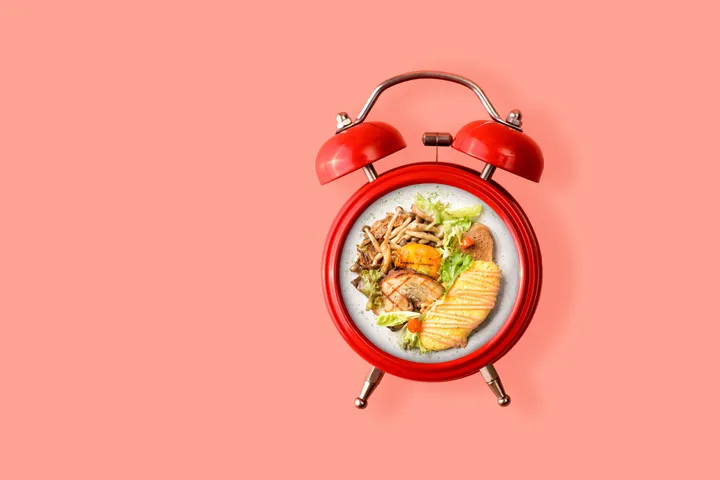
We’re nearly two years into the pandemic and while some aspects of life are starting to feel slightly “normal,” we’re still far from the days of 2019 when we felt safe packing into a crowded train during rush hour, going mask-free in crowds and dining indoors with friends.
As a result, we’ve adjusted many of our habits – including our eating. Those who used to have three square meals a day may now be more into grazing. And if 7pm used to feel like “official” dinnertime, for many of us are still working from home, it’s now more like 6pm… or even earlier, if we’re being honest.
Alisa Vitti, a functional nutritionist and CEO of Flo Living, says this isn’t necessarily a bad thing, and that 7pm always felt like “official” dinnertime because of “corporate culture, happy hour culture, and commuter reality – not because it’s biologically aligned.”
So that begs the question: Is there an “ideal” time to eat dinner? We spoke with experts on the topic to find out. Here’s everything you need to know.
The ideal dinnertime is ...
The answer to this question isn’t clear-cut, and as with most things, there’s going to be a range.
“Any time between 6 and 8pm is an ‘ideal’ dinnertime,” registered dietitian Tracy Lockwood Beckerman tells HuffPost. “That’s because it gives the average person enough time to digest before hitting the hay around 10 or 11pm.”
That being said, the ideal dinnertime will differ based on your circadian rhythm – or more specifically, if you’re an early bird or a night owl.
“It’s different for early birds versus night owls because the longer the night owls are up, the higher the odds they may go back for a late night snack,” Beckerman says. “Night owls should eat dinner later than early birds to reduce the chance of mindless snacking, empty calories and unnecessary munching late at night.”
Why you should be wary of eating dinner too late
There’s nothing wrong with a bedtime snack, but eating a big dinner too late could affect your sleep – and not in a good way.
“Being too full could negatively impact our sleep by possibly leading to acid reflux,” Beckerman says. “If there’s too much food digesting in your stomach and you lie down, it could potentially put pressure on your oesophageal sphincter, resulting in unpleasant reflux.”
Additionally, “eating too close to bedtime can decrease the quality of your sleep, increase inflammation and can absolutely make weight management more difficult as well as increase the likelihood that you will experience night sweats or hot flashes,” Vitti says.
In other words, if you tend to go to bed on the early side, it might be in your best interest to eat dinner earlier, too.
How lunch factors into the equation
Yes, the pandemic (and working from home) has made a difference in when we eat dinner – but it’s also changed our lunchtimes. And according to Beckerman, we should factor that in when we think about the last meal of the day.
“The later you eat lunch, the later your body will be ready for dinner,” she says. “The earlier you eat lunch, the earlier your body will be expecting dinner.”
If you find yourself eating lunch at 11 a.m. (it happens), one easy solution to avoiding a 4pm dinner is throwing in a balanced snack.
“This in-between snack will also prevent you from going into dinner famished, so you are less likely to unexpectedly overeat,” Beckerman says. “The snack will allow you to make a rational and balanced dinner decision because you will be making a choice with a fed and satisfied brain rather than a hangry, impulsive or fatigued brain.”
Does the ideal dinnertime differ based on gender?
It’s no secret that hormones affect just about everything, and that includes our eating habits. For women of reproductive age, being flexible might be more beneficial than being rigid with their mealtimes.
“Women in their reproductive years, especially during the luteal phase of their cycle [the phase after ovulation, or about two weeks in], need more calories and more slow-burning macros [nutrients like protein, carbs and fat] to keep blood sugar stable, keep PMS at bay, maintain a healthy weight and to have quality sleep,” Vitti says.
This means women should work on listening to their bodies when deciding what time to eat dinner, and even how much they eat.
It’s important for men to listen to their bodies, too, but their hormones fluctuate less, making this less of a necessity.
“Men don’t have an infradian rhythm, so they can stick to their same meal timing every 24 hours,” Vitti adds, referring to the menstrual cycle, which is the most common type of infradian rhythm.
At the end of the day, what time you eat dinner really comes down to what works best for you.
“People should eat at a time that is realistic for their lifestyles and sleep habits,” Beckerman says. “That may mean eating a later lunch during the day if you know you won’t sit down for dinner until 9pm, which is totally OK!”
Women’s rights are human rights!
We are all entitled to human rights. These include the right to live free from violence and discrimination; to enjoy the highest attainable standard of physical and mental health; to be educated; to own property; to vote; and to earn an equal wage.
But across the globe many women and girls still face discrimination on the basis of sex and gender. Gender inequality underpins many problems which disproportionately affect women and girls, such as domestic and sexual violence, lower pay, lack of access to education, and inadequate healthcare.
For many years women’s rights movements have fought hard to address this inequality, campaigning to change laws or taking to the streets to demand their rights are respected. And new movements have flourished in the digital age, such as the #MeToo campaign which highlights the prevalence of gender-based violence and sexual harassment.
Through research, advocacy and campaigning, Amnesty International pressures the people in power to respect women’s rights.
On this page we look at the history of women’s rights, what women’s rights actually are, and what Amnesty is doing.
What do we mean when we talk about women’s rights? What are we fighting for? Here are just some examples of the rights which activists throughout the centuries and today have been fighting for:
During the 19th and early 20th centuries people began to agitate for the right of women to vote. In 1893 New Zealand became the first country to give women the right to vote on a national level. This movement grew to spread all around the world, and thanks to the efforts of everyone involved in this struggle, today women’s suffrage is a right under the Convention on the Elimination of All Forms of Discrimination Against Women (1979).
However, despite these developments there are still many places around the world where it is very difficult for women to exercise this right. Take Syria for example, where women have been effectively cut off from political engagement, including the ongoing peace process.
In Pakistan, although voting is a constitutional right, in some areas women have been effectively prohibited from voting due to powerful figures in their communities using patriarchal local customs to bar them from going to the polls.
And in Afghanistan, authorities recently decided to introduce mandatory photo screening at polling stations, making voting problematic for women in conservative areas, where most women cover their faces in public.
Amnesty International campaigns for all women to be able to effectively participate in the political process.
Everyone should be able to make decisions about their own body.
Every woman and girl has sexual and reproductive rights . This means they are entitled to equal access to health services like contraception and safe abortions, to choose if, when, and who they marry, and to decide if they want to have children and if so how many, when and with who.
Women should be able to live without fear of gender-based violence, including rape and other sexual violence, female genital mutilation (FGM), forced marriage, forced pregnancy, forced abortion, or forced sterilization.
But there’s a long way to go until all women can enjoy these rights.
For example, many women and girls around the world are still unable to access safe and legal abortions. In several countries, people who want or need to end pregnancies are often forced to make an impossible choice: put their lives at risk or go to jail.
In Argentina, Amnesty International has campaigned alongside grassroots human rights defenders to change the country’s strict abortion laws. There have been some major steps forward, but women and girls are still being harmed by laws which mean they cannot make choices about their own bodies.
We have also campaigned successfully in Ireland and Northern Ireland, where abortion was recently decriminalised after many decades of lobbying by Amnesty and other rights groups.
In Poland along with more than 200 human and women’s rights organisations from across the globe, Amnesty has co-signed a joint statement protesting the ‘Stop Abortion’ bill.
South Korea has recently seen major advances in sexual and reproductive rights after many years of campaigning by Amnesty and other groups, culminating in a ruling by South Korea’s Constitutional Court that orders the government to decriminalize abortion in the country and reform the country’s highly restrictive abortion laws by the end of 2020.
In Burkina Faso, Amnesty International has supported women and girls in their fight against forced marriage, which affects a huge number of girls especially in rural areas.
And in Sierra Leone, Amnesty International has been working with local communities as part of our Human Rights Education Programme, which focuses on a number of human rights issues, including female genital mutilation.
In Zimbabwe, we found that women and girls were left vulnerable to unwanted pregnancies and a higher risk of HIV infection because of widespread confusion around sexual consent and access to sexual health services. This meant that girls would face discrimination, the risk of child marriage, economic hardship and barriers to education.
In Jordan Amnesty International has urged authorities to stop colluding with an abusive male “guardianship” system which controls women’s lives and limits their personal freedoms, including detaining women accused of leaving home without permission or having sex outside marriage and subjecting them to humiliating “virginity tests”.
Freedom of movement is the right to move around freely as we please – not just within the country we live in, but also to visit others. But many women face real challenges when it comes to this. They may not be allowed to have their own passports, or they might have to seek permission from a male guardian in order to travel.
For example, recently in Saudi Arabia there has been a successful campaign to allow women to drive, which had previously been banned for many decades. But despite this landmark gain, the authorities continue to persecute and detain many women’s rights activists, simply for peacefully advocating for their rights.
When looking at women’s rights it’s helpful to have an understanding of feminism. At its core, feminism is the belief that women are entitled to political, economic, and social equality. Feminism is committed to ensuring women can fully enjoy their rights on an equal footing with men.
Intersectional feminism is the idea that all of the reasons someone might be discriminated against, including race, gender, sexual orientation, gender identity, economic class, and disability, among others, overlap and intersect with each other. One way of understanding this would be to look at how this might apply in a real world setting, such as Dominica, where our research has shown that women sex workers, who are often people of colour, or transgender, or both, suffer torture and persecution by the police.
Gender inequality could include:
Gender-based violence is when violent acts are committed against women and LGBTI people on the basis of their orientation, gender identity, or sex characteristics. Gender based violence happens to women and girls in disproportionate numbers.
Women and girls in conflict are especially at risk from violence, and throughout history sexual violence has been used as a weapon of war. For example, we have documented how many women who fled attacks from Boko Haram in Nigeria have been subjected to sexual violence and rape by the Nigerian military.
Globally, on average 30% of all women who have been in a relationship have experienced physical and/or sexual violence committed against them by their partner. Women are more likely to be victims of sexual assault including rape, and are more likely to be the victims of so-called “honour crimes”.
Violence against women is a major human rights violation. It is the responsibility of a state to protect women from gender-based violence – even domestic abuse behind closed doors.
Sexual harassment means any unwelcome sexual behaviour. This could be physical conduct and advances, demanding or requesting sexual favours or using inappropriate sexual language.
Sexual violence is when someone is physically sexually assaulted. Although men and boys can also be victims of sexual violence, it is women and girls who are overwhelmingly affected.
Often, women are the subject of gender based discrimination in the workplace. One way of illustrating this is to look at the gender pay gap. Equal pay for the same work is a human right, but time and again women are denied access to a fair and equal wage. Recent figures show that women currently earn roughly 77% of what men earn for the same work. This leads to a lifetime of financial disparity for women, prevents them from fully exercising independence, and means an increased risk of poverty in later life.
In many countries around the world, women are denied their rights on the basis of sexual orientation, gender identity, or sex characteristics. Lesbian, bisexual, trans and intersex women and gender non-confirming people face violence, exclusion, harassment, and discrimination Many are also subjected to extreme violence, including sexual violence or so called “corrective rape” and “honour killings.”
The Convention on the Elimination of All Forms of Discrimination against Women (CEDAW) (1979) is a key international treaty addressing gender-based discrimination and providing specific protections for women’s rights.
The convention sets out an international bill of rights for women and girls, and defines what obligations states have make sure women can enjoy those rights.
Over 180 states have ratified the convention.
It might seem like an obvious point, but we cannot have a free and equal society until everyone is free and equal. Until women enjoy the the same rights as men, this inequality is everyone’s problem.
According to the UN, “gender equality and the empowerment of women and girls is not just a goal in itself, but a key to sustainable development, economic growth, and peace and security”. Research has shown this to be the case – society gets better for everyone when women’s rights are upheld and taken seriously.
Although grassroots movements have done so much to effect change, when everyone comes together to support women’s rights we can be so much stronger. By working alongside individual activists and campaigners on the ground as well as running our own targeted campaigns, movements such as Amnesty International can form a formidable vanguard in the fight for women’s rights.